
What happens when your loved one grows old and you cannot be there? And Who will understand them when you cannot?
One day, someone else will ask your son if he is in pain.
Will they know that silence means yes?
Will they recognize that pacing means anxiety?
Will they understand that “I’m fine” is the sentence he says when he is overwhelmed?
Or will they write “no concerns noted” and move on?
For many families raising or caring for someone with an intellectual or developmental disability, there is a question that never fully leaves the room.
You know how your loved one communicates when something hurts. You know which changes in routine can cause distress, what a certain sound or gesture means, and when “fine” does not really mean fine. You have spent years explaining them to doctors, teachers, caseworkers, employers, and sometimes even relatives.
But parents age. Siblings move, work, and raise families of their own. Caregivers get sick, burn out, or simply cannot keep doing everything alone.
Then a loved one with IDD may enter a world that was not built around them: senior services, hospitals, nursing homes, guardianship courts, Medicaid paperwork, and unfamiliar staff making decisions quickly. The danger is not that families do not care. It is that the people who know the person best are often tired, overwhelmed, or no longer able to be in every room.
This is not meant to scare you. It is meant to help you prepare.
There are steps families can take now to protect a loved one’s voice, routines, care, money, and safety, before a crisis forces strangers to make decisions without the full picture.
Intellectual and developmental disabilities exist on a wide spectrum. Some adults make their own legal, medical, and financial decisions independently. Others need varying levels of support. The goal throughout this article is to match legal and practical protections to the individual’s actual abilities, not to assume one approach fits everyone.
Why This Gets Harder as They Age, Not Easier
Right now, your adult child probably gets support built around helping them live, grow, and stay connected to their community. This kind of support is called habilitative care. It means someone helps them keep the skills they have, learn new ones, and stay as independent as possible.
Once someone with a disability gets older, and especially once they reach senior age, a lot of that support quietly starts to shift. Elder care, the kind built for typical aging adults, mostly focuses on a different problem: helping someone who was independent their whole life manage the physical changes that come with getting old. Think meals, bathing, help getting around.
That is a completely different kind of care than what your child may have needed for decades.
Here is the honest part: nobody automatically kicks your child out of the support they know at a certain birthday. But as they get older, and as caseworkers change, and as new assessments come in, it becomes easier for the specific things they need, the skill support, the routines, the way someone talks to them or reads their behavior, to slip through the cracks. Not because anyone decided to take it away. Because two systems that were never built to talk to each other are now both trying to take care of the same person, and nobody owns making sure it actually works.
If your adult child is getting older, this is the moment to start asking questions out loud instead of hoping the paperwork sorts itself out.
Who Will Make Decisions When Your Adult Child Needs Help?
This is the part almost nobody explains clearly, and it matters more than almost anything else in this article.
At some point, you may need to decide who is legally allowed to make decisions for your adult child if they cannot make certain decisions safely on their own. There are a few different paths, and none of them is automatically the right one for every family. Here they are in plain language.
Guardianship. A court gives one person, often a parent, the legal authority to make decisions for your child. This can include medical care, where they live, and their money. It is a strong layer of protection. It also takes away real rights and freedoms from your child, sometimes including the right to vote or make their own medical choices, depending on exactly what the court order says. Guardianship is not something to enter lightly, and it is not something to avoid out of fear either. It depends entirely on how much support your child actually needs.
Here is something families do not think about until it is already happening: if you are the guardian, and something happens to you, that responsibility has to go to someone else. Sometimes that is a sibling. Sometimes it is a stranger appointed by the court, someone who has never met your child and does not know their routines, their fears, or the way they communicate. That transition can be traumatic for your child, and it happens more often than it should, simply because nobody planned ahead.
Supported decision-making. Instead of a court taking away your child’s legal rights, your child keeps them, and formally names people they trust to help them understand information and make choices. This keeps more of their independence intact. The tradeoff is that there is less built-in oversight, so it depends heavily on the people your child chooses to trust.
Power of attorney. This lets someone manage specific things, usually finances, on your child’s behalf. It can be useful, but be honest with yourself about the risk. A power of attorney gives real access to bank accounts and property, sometimes without a court checking in at all. If your child cannot easily catch a mistake or a theft, that access needs to sit with someone you trust completely, and even then, it is worth having a second person check in regularly.
Read our full guide: Power of Attorney Abuse and Deed Theft →One more thing worth knowing, because it is upsetting but real: a home that sits empty while your loved one lives in a care facility can become a target. Scammers look for exactly this, a property with nobody checking on it regularly. If your family owns a home that may sit vacant for long stretches, it is worth asking a lawyer how to protect the title now, before there is ever a problem.
Find an Elder Law Attorney Near You →When Your Child Needs Both Medicaid and Medicare
Many adults with disabilities end up needing both Medicaid and Medicare at the same time, Medicaid usually first, based on income and disability, with Medicare often kicking in earlier than the usual age 65 if your adult child already receives disability benefits through Social Security.
Here is the one thing worth remembering: somebody has to coordinate both systems, and too often, that somebody ends up being you. Medicaid tends to cover day-to-day support and long-term help. Medicare tends to cover medical care and hospital visits. When your child needs both at once, which is common, nothing forces the two to talk to each other. Some states have built programs meant to connect them, but even where those exist, there is a real shortage of providers who understand both aging and lifelong disability, often because Medicaid pays too little for that kind of specialized care to attract enough of them.
Find Care Coordination Support in Your Area →Nursing Homes Are Often Not Built for This
If a nursing home ever becomes part of the conversation for your adult child, there is something important you need to know. Most nursing homes are built and staffed for typical aging problems: recovering from a stroke, managing heart conditions, helping someone who is physically frail. Most nursing home staff have very little training in lifelong intellectual or developmental disabilities.
That gap is not just inconvenient. It can be dangerous. A staff member who does not understand your child’s normal behavior, rocking, repeating words, needing extra time to process a question, can misread it as something else entirely, sometimes even as aggression, which can lead to your child being sedated or restrained when what they actually needed was patience and understanding.
Read: The Deadly Reality of Bedsores → Read Our Guide: When a Nursing Home Closes →There is a federal rule meant to prevent this. It is called PASRR, and here is what it actually means for your family, without the jargon.
What PASRR Actually Is
Before your child can be admitted to a nursing home, they are supposed to be screened to check whether they have a disability like this. That is step one, called Level I.
If that first screening raises any flag at all, a second, deeper evaluation is required before your child can be admitted. That is Level II. This evaluation does three things for your family. It confirms your child’s diagnosis. It checks whether a nursing home is actually the right place for them, or whether they could be better and more safely supported somewhere less restrictive. And if a nursing home placement does move forward, it spells out exactly what specialized support that facility is legally required to provide.
Why PASRR Still Fails Families
Here is the honest warning: this system does not always work the way it is supposed to. That first screening misses people more often than it should. And even when the second evaluation correctly says a facility needs to provide specialized support, many facilities simply do not have the staff or training to actually follow through. So if a nursing home is ever part of your child’s future, do not assume the screening protected them. Ask directly whether a Level II evaluation happened, and ask to see it in writing.
Who to Call When Something Feels Wrong
If you ever suspect your adult child is being neglected, hurt, or taken advantage of, here is who is actually responsible for stepping in, explained simply.
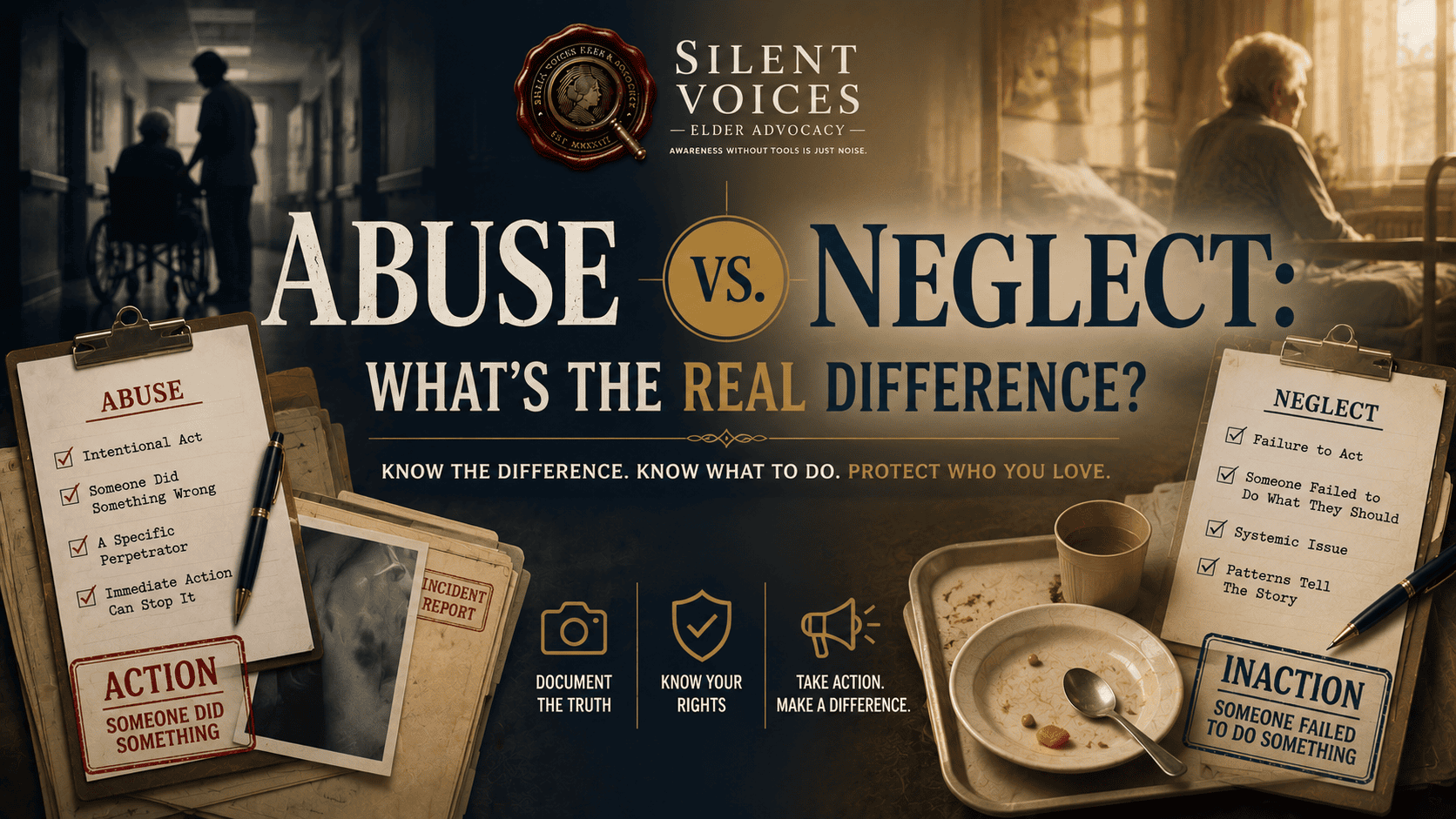
Read: Abuse vs. Neglect, What’s the Difference in a Nursing Home? →If your child lives at home or in the community, the agency to call is Adult Protective Services, often shortened to APS. If your child is in real, immediate danger, APS has the power to remove them from that situation right away and involve the court.
If your child lives in a licensed nursing home or care facility, the agency responsible is usually called the Office of Long-Term Care, or OLTC. They inspect facilities, and they have the power to fine a facility or shut down its ability to take Medicaid patients if things are bad enough.
There is also someone called a Long-Term Care Ombudsman. Think of them as an advocate whose only job is representing what your child wants. There is a catch worth knowing: they usually need permission before reporting anything to authorities, and if your child cannot give that permission and you are not available either, that can slow things down at exactly the wrong moment.
Finally, every state has an independent watchdog organization, often called Protection and Advocacy. These organizations have some of the strongest legal power of anyone on this list, including the ability to pull medical records and investigate a facility directly, even against the state itself.
You do not need to figure out the perfect agency before you say something. If your gut tells you something is wrong, start with whichever one matches where your child lives, and do not wait for a perfect answer before making the call. If it feels urgent, call more than one.
Step-by-Step: How to Report Nursing Home Abuse →What You Can Actually Do, Starting Now
You cannot fix the whole system. But you can put a few things in place that make a real difference for your adult child, whether you are here or not.
- If your child is aging out of one kind of support and into another, ask directly what happens to their specific care during that transition. Do not assume it carries over. Often it does not, unless someone pushes for it.
- Learn the difference between guardianship, supported decision-making, and power of attorney before a crisis forces you to choose quickly. The right answer depends on exactly what your child needs, not on which option feels most familiar.
- If a nursing home ever comes up, ask specifically whether a Level II evaluation happened, and get the answer in writing.
- If you suspect harm, do not wait for certainty before calling for help. Start with the agency connected to where your child lives, and call more than one if you are worried about safety.
- Build a simple care profile for your child now, while you are the one who knows the answers. Put it somewhere a new caregiver could actually find it.
That last one matters more than it sounds like it does. Everything you know about your child, the small things nobody else would think to ask, does not have to disappear just because you are no longer the one standing next to them. Write it down. It is one of the only things in this entire system that is completely within your control.
Build a Care Profile
A care profile is a written record of everything a new caregiver, doctor, or facility staff member would need to know about your adult child on day one, so they are not starting from zero. Keep it somewhere easy to find, and update it as things change.
- Preferred name
- How they communicate
- Things that frighten them
- Medical diagnoses
- Medications
- Baseline behavior, what is normal for them
- How they express pain
- Food preferences
- Daily routine
- Guardianship or supported decision-making information
- Emergency contacts
- Religious preferences
- Sensory sensitivities
- Things staff should never assume
Free, printable, and fillable. Save it, fill it out, and keep it somewhere a new caregiver could find it.
Quick Glossary
- IDD
- Short for intellectual and developmental disabilities. Covers lifelong conditions like autism, cerebral palsy, and Down syndrome that affect how someone learns, communicates, or manages daily life.
- Habilitative care
- Support built to help someone keep the skills they have and build new ones, rather than just managing physical decline. This is the kind of support most people with IDD rely on for most of their lives.
- Guardianship
- A court gives one person legal authority to make decisions for someone else. It offers strong protection but takes away real rights, depending on what the court order says.
- Supported decision-making
- An alternative to guardianship. The person keeps their legal rights and formally names people they trust to help them understand information and make their own choices.
- Power of attorney (POA)
- A legal document that lets someone manage specific things, usually money or property, on another person’s behalf.
- Dual eligible
- Someone who qualifies for both Medicaid and Medicare at the same time. Common for adults with disabilities who also meet Medicaid’s income requirements.
- PASRR
- A federal screening process that is supposed to happen before someone is admitted to a nursing home, to check whether they have a serious mental illness or IDD and whether a nursing home is actually the right place for them.
- Level I / Level II
- The two steps of a PASRR screening. Level I is a quick check for any sign of IDD or serious mental illness. Level II is a deeper evaluation required if Level I raises any concern.
- APS (Adult Protective Services)
- The agency that investigates suspected abuse or neglect happening in someone’s home or community.
- OLTC (Office of Long-Term Care)
- The agency that investigates suspected abuse or neglect happening inside a licensed facility, like a nursing home.
- Long-Term Care Ombudsman
- An independent advocate whose job is representing what a resident in a care facility wants, though they usually need the resident’s permission before reporting a problem to authorities.
- Protection and Advocacy (P&A)
- An independent watchdog organization, funded federally, with strong legal power to investigate facilities and access medical records, even when other agencies cannot.
Frequently Asked Questions
My adult child already has a caseworker. Isn’t this their job to catch?
Do I need a lawyer to set up guardianship or supported decision-making?
What if my adult child can communicate but still needs help with big decisions?
How do I find out if a nursing home actually did a Level II evaluation?
What if I am not sure which agency to call?
I am not a parent. I am a sibling, or I have taken on this role for a family friend. Does any of this still apply to me?
One day someone else may help your loved one get dressed. Someone else may hand them medication. Someone else may answer the call light.
The goal is not to stop that day from coming. The goal is to make sure those people know who your loved one is before they ever meet them.
Planning is not giving up hope. Planning is another way of protecting them.
Nathalie Frias, certified electronic health records specialist and founder of Silent Voices Elder Advocacy, a platform for elder care accountability.
Her writing translates clinical documentation into evidence families and advocates can use to expose neglect, financial exploitation, and regulatory failures in long-term care.



Leave a Reply