
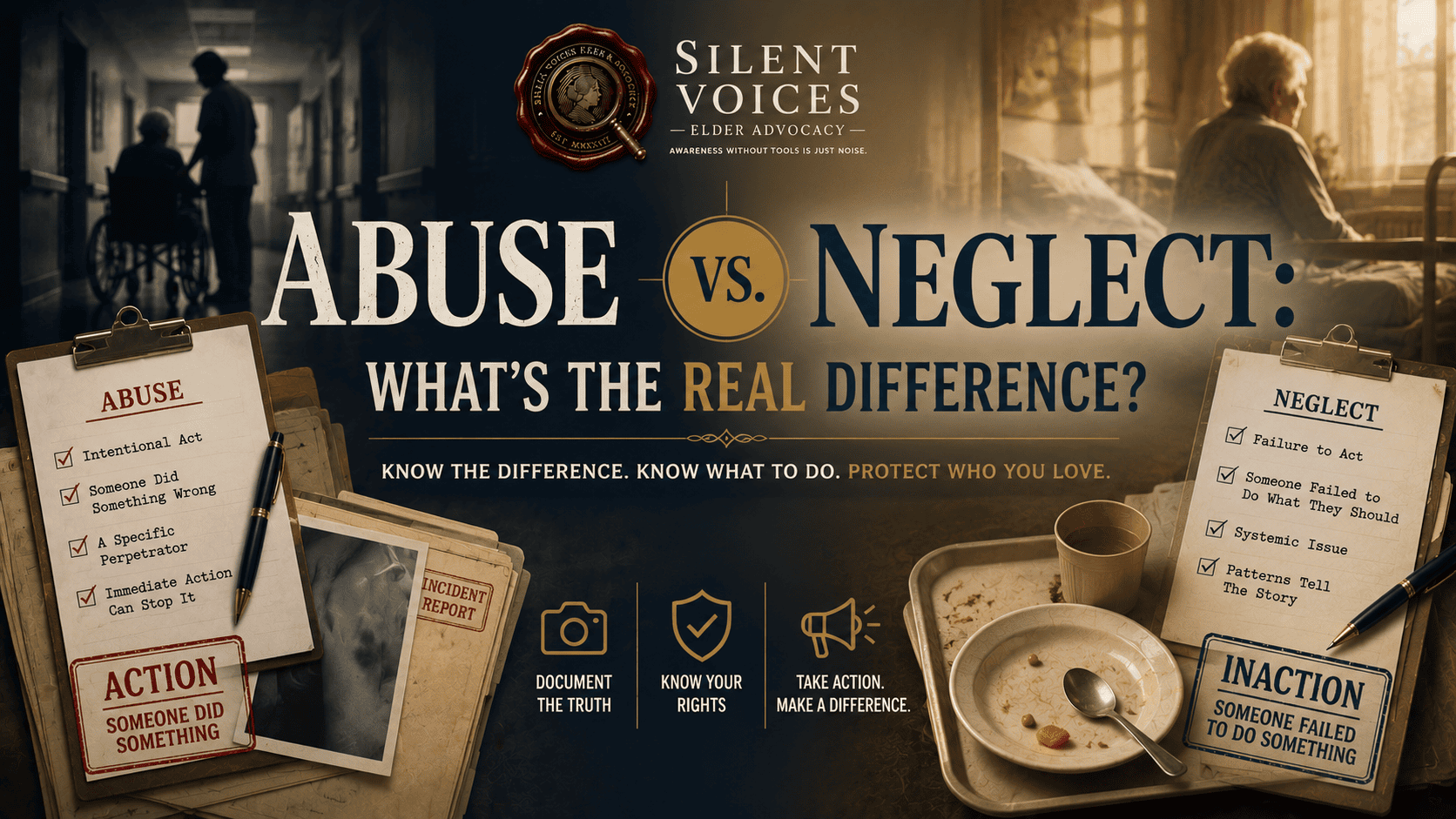
Families often use the words abuse and neglect interchangeably. Investigators do not. The difference affects how a complaint is handled, what evidence matters most, and what happens next.
To the law, to state regulators, and to the people who will investigate your report, abuse and neglect are two distinct categories. Knowing exactly which one you are looking at tells you what evidence to gather and who to call first.
The Short Answer: Action vs. Inaction
The fastest way to tell the two apart is to look at what actually happened.
What Is Abuse? The Intentional Act
Abuse happens when a person deliberately causes harm, pain, or distress to a resident. It is an active violation, not a passive failure. Because someone has to actively do something wrong, abuse usually points to a specific perpetrator: a particular aide, a nurse, another resident, or even a visiting family member.
Intentional does not mean the person planned to cause harm for days or weeks. It simply means the harmful act was deliberate, which is why pushing, grabbing, or screaming at a resident in a single bad moment still qualifies as abuse.
- Physical: Slapping, pushing, or handling a resident too roughly.
- Emotional: Yelling at, mocking, or threatening a resident to make them afraid.
- Financial: Stealing a resident’s cash or cards, or forging checks.
- Chemical: Sedating a resident who does not medically need it, just to keep them quiet and easier to manage.
Mr. Alvarez’s daughter noticed the same fingerprint-shaped bruise on his upper arm on two visits, three weeks apart. She asked the aide on duty about it both times, and got a different explanation each time. She requested the incident report. There wasn’t one. She called the police that afternoon.
Composite example for illustration.Abuse is an act of commission. It is often a crime in its own right, and it means there is a specific person who needs to be removed from your loved one’s presence immediately.
What Is Neglect? The Systemic Failure
Neglect is the failure to provide the basic goods and services a resident needs to stay safe and healthy. Unlike abuse, neglect does not require malicious intent. A caregiver does not have to want to hurt a resident for neglect to occur. In most modern facilities, neglect is rarely the fault of one careless employee. It is a systemic failure, usually caused by understaffing. When a facility does not schedule enough staff, basic care becomes physically impossible to deliver, and residents pay the price.
Good employees cannot provide eight hours of care in four hours. When staffing falls below what residents actually need, neglect stops being an occasional accident and becomes predictable.
- A severe, infected pressure sore developing because no one repositioned the resident.
- Rapid weight loss or dehydration because staff did not have time to help with meals.
- A resident left in soiled clothing or briefs for hours at a time.
- Missed medication doses, or an unanswered call button after a fall.
Mrs. Whitfield’s son found her in the exact position she’d been in that morning, eight hours later. Her briefs hadn’t been changed. When he asked about her turning schedule, three different aides gave him three different answers. No one had done anything to her on purpose. There simply were not enough staff members on the floor to provide the care every resident needed.
Composite example for illustration.Neglect is an act of omission. It is quiet, but it is the most common and most dangerous form of harm in nursing homes today, and it usually points to a facility-wide problem rather than one bad employee.
Can Abuse and Neglect Happen at the Same Time?
Yes. Families often think they have to pick one label, but a single resident can experience both at once, sometimes in the same afternoon.
A resident develops a severe pressure injury because staff failed to reposition them. That is neglect. When the resident cries out in pain and a staff member responds by yelling at them or shoving them roughly back into bed, that is abuse. Both happened to the same person, minutes apart.
Do not narrow your report to fit a single category. Document what was done to your loved one and what was not done for them separately, and report both.
Why Knowing the Difference Matters
Naming what you are seeing decides your next move.
If You Suspect Abuse
- Call local law enforcement if you believe a crime occurred.
- Photograph injuries immediately.
- Request the incident report in writing.
- Ask that the employee be removed from your loved one’s care pending investigation.
- Notify Adult Protective Services and the Long-Term Care Ombudsman.
If You Suspect Neglect
- Photograph conditions with a visible timestamp.
- Request the care plan, turning logs, meal records, and Medication Administration Record.
- Keep a written timeline of what you observe and when.
- Report the facility to your state’s survey agency or Office of Long-Term Care.
- Contact the Long-Term Care Ombudsman.
Call It What It Is
You do not need a medical degree to recognize when something is wrong. If a resident is being harmed by someone’s actions, document the abuse. If they are being harmed because necessary care is not happening, document the neglect. The sooner you identify the pattern, the sooner you can start protecting your loved one.
New articles, resource guides, and elder care updates delivered free to your inbox. No spam. Unsubscribe at any time.
Subscribe to Silent Voices →

Leave a Reply