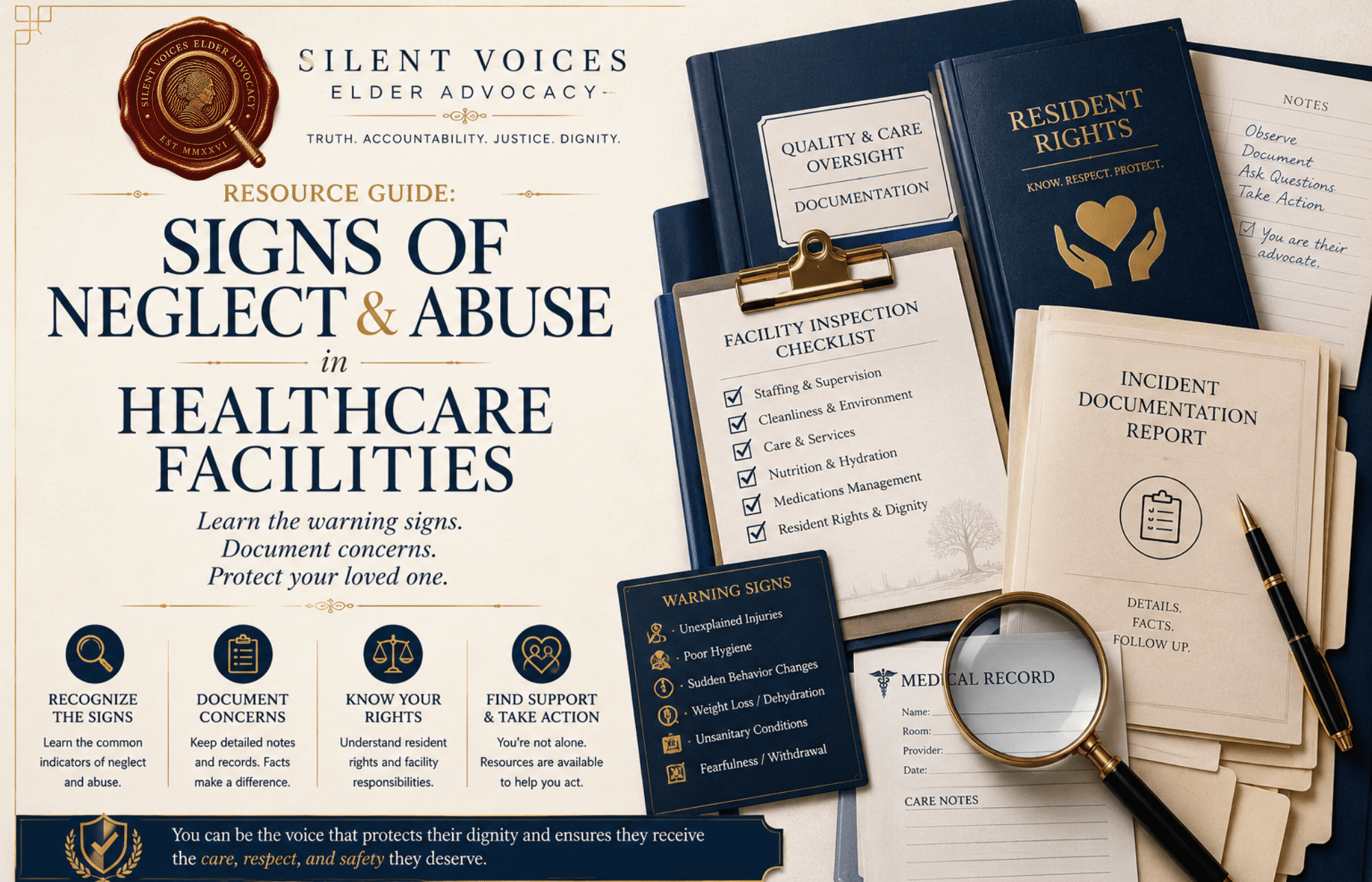
Silent Voices · Resource Series · Three guides for families
Silent Voices Elder Advocacy · Resource Guide · 01 of 03
Families and caregivers who want to know what abuse and neglect look like in a nursing home setting before a crisis forces them to find out.
Knowing what to look for is the first step to protecting someone you love. This guide covers the physical, behavioral, financial, and neglect indicators that families most often overlook until it is too late.
Free Resource · Silent Voices Elder Advocacy
Family Guide: Recognizing, Documenting
& Reporting Neglect and Abuse
Download the Free Family Guide
↓
PDF · Free to download, print, and share
The Silent Epidemic
Understanding the Scope
Nursing home abuse and neglect are more common than most families realize, and they are often hidden behind medical language, staffing excuses, and silence. The data below outlines the stark reality of how frequently each type of harm is reported.
Reported Abuse Categories (%)
Recognizing the Critical Signs
Four Categories to Watch
Abuse is not always physical or immediately visible. It shows up as behavioral shifts, financial irregularities, and gradual physical decline. These four categories cover the primary indicators families most often miss.
Physical Indicators
- Unexplained bruises, welts, or scars
- Broken bones, sprains, or dislocations
- Marks on wrists suggesting restraints
- Frequent, unexplained hospitalizations
- Caregiver refusal to allow private visits
Behavioral Indicators
- Sudden withdrawal from normal activities
- Unusual changes in behavior or sleep
- Fear or anxiety around specific staff
- Depression or emotional flatlining
- Rocking, sucking, or mumbling to oneself
Neglect Indicators
- Unusual weight loss or malnutrition
- Untreated bedsores or open wounds
- Unsanitary conditions, soiled bedding
- Poor hygiene or unkempt appearance
- Missing necessary aids (glasses, walkers)
Financial Indicators
- Large or unexplained bank withdrawals
- Sudden changes to wills or beneficiaries
- Unpaid bills despite adequate funds
- Missing personal belongings or property
- Unnecessary services or subscriptions billed
Systemic Failure
The Rise in Neglect
Quality of care is tied directly to staffing levels and resources. Chronic staff shortages and high turnover create conditions where neglect goes unaddressed. The trend below shows a steady increase in reported neglect incidents per 1,000 residents over five reporting years.
Reported Neglect Incidents per 1,000 Residents — 5-Year Trend
Neglect incidents have risen consistently, with the sharpest increase occurring between 2020 and 2021. Staffing crises, facility closures, and reduced oversight contributed to conditions where basic care routinely failed.
Taking Action
The Reporting Protocol
You do not need proof to act. You need a concern. Follow these four steps in order once you suspect abuse or neglect.
Ensure Immediate Safety
If there is immediate, life-threatening danger, call 911 before anything else. Do not wait for facility staff to respond.
Document Everything
Take photos of injuries or unsafe conditions. Write down dates, times, observations, and the names of staff members on duty.
Report to Management
File a formal written complaint with the facility administrator or director of nursing. Request a written response describing their investigation.
Contact Authorities
Report to Adult Protective Services, your state’s Office of Long-Term Care, and the Long-Term Care Ombudsman program.
Step One
Start with What Your Heart Is Noticing
Something about your loved one’s care does not feel right. Those feelings are valid. You do not need proof to pay attention. You only need a concern.
“I’m worried about their body.”
- I see bruises, injuries, or changes in their physical condition.
- The explanations I am given do not feel reassuring.
- Something tells me this is not just normal aging.
“I’m worried about their spirit.”
- They seem more afraid, withdrawn, or unlike themselves.
- Their mood changes when certain people enter the room.
- I feel like they are not able to speak freely in front of staff.
“I’m worried about their money and belongings.”
- Bills, bank accounts, or charges do not add up.
- Things go missing from their room without explanation.
- I feel pressure or secrecy around financial decisions.
“I’m worried their basic needs aren’t being met.”
- I notice strong odors, poor hygiene, or unchanged clothing.
- I see bedsores, missed medications, or untreated pain.
- I feel like food, fluids, or medical care are being delayed.
Needing to ask questions does not mean you are imagining things. Even one serious sign is enough to pause, pay attention, and consider taking action. You are allowed to speak up for someone who cannot speak up for themselves.
Warning Signs by Category
What to Look For
Select a category to expand the detailed warning signs. You do not need to see all of them to act. Even one high-concern indicator is enough to file a report.
Physical abuse leaves marks, but staff often attribute them to falls or normal aging. Know the difference between what is expected and what demands an explanation.
Unexplained or Suspicious Bruising
- Clustered bruises on the upper arms, wrists, or inner thighs
- Bruises in various stages of healing at the same time
- Bruises that match the shape of an object, belt, or hand
- Bilateral bruising on both sides of the body simultaneously
- Bruises your loved one cannot explain or explains inconsistently
Marks Suggesting Physical Restraint
- Ligature marks on wrists, ankles, or around the torso
- Rope burns or chafing inconsistent with medical equipment use
- Bedsores (pressure ulcers) on the tailbone, heels, or hips
- Wounds that appear infected and have not been treated
- Repeated injuries in the same location over multiple visits
Signs of Physical Neglect
- Sudden unexplained weight loss or visible malnutrition
- Dehydration, dry skin, sunken eyes, or dark concentrated urine
- Smell of urine or feces on clothing or bedding during your visits
- Untreated skin rashes, fungal infections, or dental problems
- Dirty or unchanged clothing across multiple visits
Medication and Medical Care Red Flags
- Over-sedation or unusual drowsiness not explained by a diagnosis
- Missed medications confirmed by pharmacy records
- Untreated pain your loved one reports but staff dismisses
- Delays in calling 911 during a medical emergency
- Sudden decline in a condition that was previously stable
Pressure ulcers are largely preventable with proper repositioning and care. A Stage 3 or Stage 4 bedsore is almost always evidence of neglect, not an unavoidable complication of aging.
Behavioral changes are often the earliest warning sign and the most dismissed. Families are told it is “just the dementia” or “part of getting older.” Trust what you know about your loved one.
Sudden Mood and Personality Shifts
- Withdrawal from activities they previously enjoyed
- Increased agitation, crying, or expressions of hopelessness
- Refusal to speak when certain staff members are present
- Rocking, sucking, or other self-soothing behaviors that are new
- Statements like “I want to go home” combined with unexplained fear
Fear Around Specific Caregivers
- Visible flinching when touched, even gently
- Refusal to be alone with a specific staff member
- An “air of silence” when staff enters the room
- Reluctance to answer questions honestly in front of staff
- Anxiety that escalates at shift changes or specific times of day
Isolation and Restricted Access
- Staff discouraging your visits without medical justification
- Calls that seem monitored or cut short
- Being told your loved one is “asleep” or “unavailable” repeatedly
- Room changes that limit interaction with other residents
- New visiting hour “rules” that did not exist before
Signs of Sexual Abuse
- Unexplained genital injuries, bruising, or bleeding
- Torn or stained undergarments
- Sexually transmitted infections with no prior history
- Extreme distress during bathing, toileting, or personal care
- Sudden onset of sexually inappropriate language or behaviors
Financial exploitation of nursing home residents is common and underreported. It is often committed by staff, other residents, or even family members. Watch the money closely.
Suspicious Financial Transactions
- Unexplained withdrawals or transfers from bank accounts
- Changes to direct deposit or beneficiary designations
- ATM activity in locations your loved one cannot access
- Debit card charges for items that were never delivered
- Bank statements that stop arriving or go missing
Document and Legal Red Flags
- Signatures on documents your loved one did not recall signing
- New power of attorney granted to a staff member or new acquaintance
- Changes to wills or beneficiary designations without family knowledge
- Personal property going missing from the room
- Staff or residents asking for money, gifts, or loans
Billing Fraud and Unpaid Bills
- Unpaid bills despite adequate pension, Social Security, or savings
- Charges for services or supplies that were never provided
- Facility billing Medicare or Medicaid for procedures not performed
- Sudden changes in the resident’s personal funds account
- Resistance from staff when you request a full accounting of funds
Isolation as a Financial Control Tool
- A new “friend” or caregiver who controls access to your loved one
- Family members cut off from financial information or accounts
- Your loved one expressing confusion about their own finances
- Reluctance to discuss money matters even in private
- Facility staff inserting themselves into financial conversations
Nursing homes that hold resident funds in a trust account are required by federal law to provide a full accounting on request. If the facility refuses or delays, that refusal is itself a reportable event.
Self-Assessment Tool
Use This Checklist
This checklist is here to organize what you have been noticing. It is not a test and there are no perfect answers. Check every sign you have observed. You do not need to see all of them to act. Even one high-concern indicator is enough to reach out for help.
Take Action
How to Report Abuse
You do not need proof to file a report. You need a concern. These resources connect you to the right agency. Every report creates a record. Every record makes the next family’s fight easier.
Frequently Asked Questions
Questions Families Ask
These are the questions Silent Voices hears most often from families trying to make sense of what they are seeing.
Do I need proof before I can file a complaint?
No. You file a report based on concern, not confirmed evidence. Adult Protective Services and the Long-Term Care Ombudsman are trained to investigate. Your job is to report what you have observed. Their job is to determine what it means. Waiting for proof is one of the most common reasons abuse goes unreported.
What is the difference between abuse and neglect?
Abuse is an intentional act that causes harm. Neglect is a failure to provide care that causes harm. Both are serious, both are reportable, and both leave marks. The legal distinction matters when a case reaches court. For the purposes of reporting and protecting your loved one, treat them the same way: document what you see and contact the appropriate agency.
Will the facility retaliate against my loved one if I report?
Retaliation against a resident for filing a complaint is prohibited under federal law. That does not mean it never happens, which is why documentation matters. When you report, note the date, the agency you contacted, and the name of the person you spoke with. If anything changes in your loved one’s care after a report, document it immediately and include it in a follow-up report to the same agency.
My loved one has dementia. Can they still be believed?
Yes. Investigators are trained to work with residents who have cognitive impairments. A person with dementia telling you something hurts or expressing fear around a specific caregiver is meaningful information. Physical evidence, behavioral patterns, and your own observations carry independent weight regardless of your loved one’s cognitive status. Do not let a diagnosis be used to silence a report.
How do bedsores happen and when are they evidence of neglect?
Pressure ulcers develop when a resident is left in the same position too long without repositioning. Stage 1 and Stage 2 sores are not uncommon in high-acuity patients, but they should be identified early and treated. A Stage 3 or Stage 4 pressure ulcer, which means the wound has reached muscle or bone, is considered largely preventable with basic care. If your loved one has a deep or worsening bedsore, that is a reportable event regardless of what the facility tells you about the resident’s condition.
You Saw Something.
Now Do Something.
Every report filed creates a record. Every record makes the next family’s fight easier. Silent Voices Elder Advocacy exists to make sure these stories do not disappear.
Submit Your Story All Resources